Where Does Your $200 Galapagos Park Fee Actually Go?
The entrance fee doubled to $200 in August 2024, and the $20 transit card is separate. What each charge covers, how it is collected on arrival, and an honest look at whether it is money well spent.
 By Oleg Galeev, Galapagos travel writer, three trips to the islands
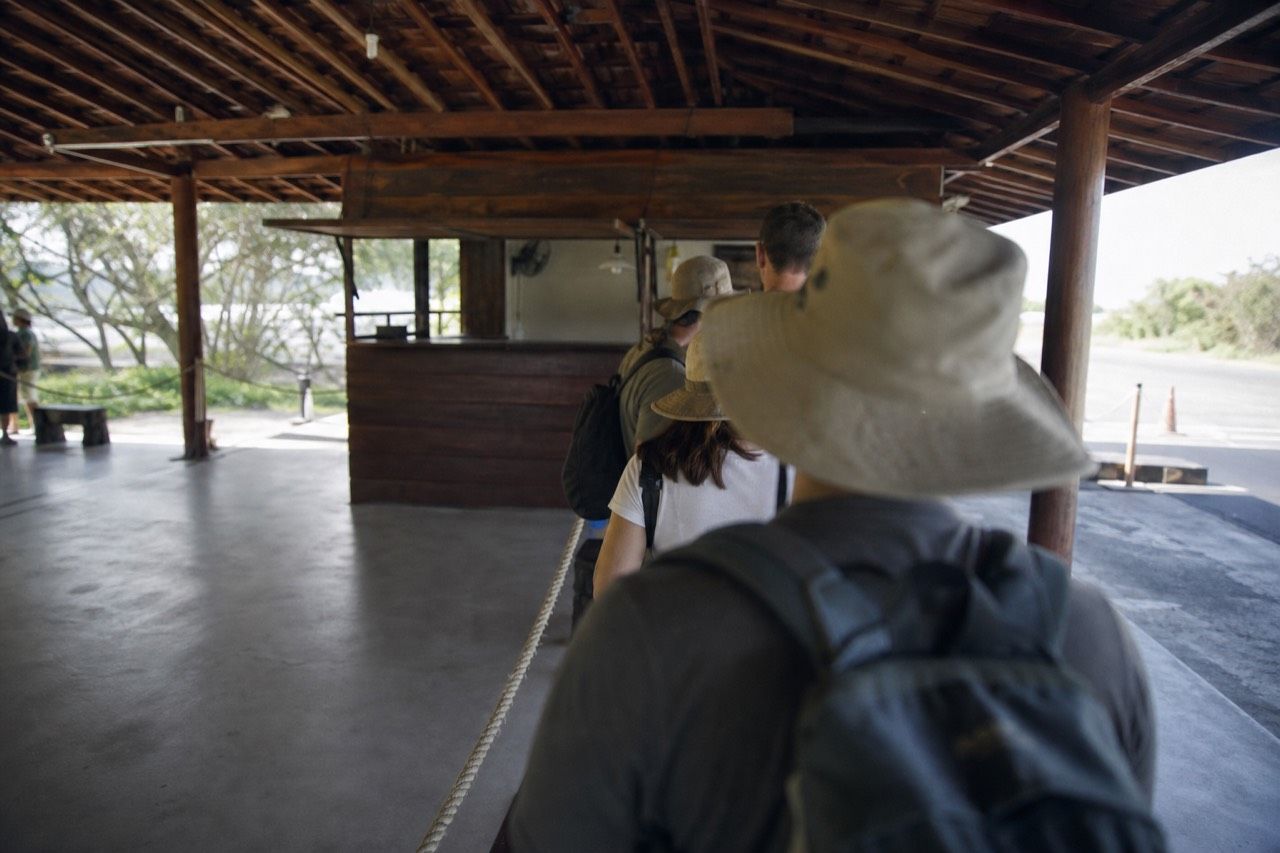
I paid $100 to enter the Galapagos in 2021 and again in 2023. In 2025 I paid $200, standing in the same arrival hall at Baltra with the same rangers taking the same cash. The fee doubled on 1 August 2024, the first increase in decades, and it changed the arithmetic of a Galapagos trip more than most people expect. It also raised a fair question that almost nobody answers properly: what is that money actually doing.
How much is the Galapagos park fee, and what else do you pay?
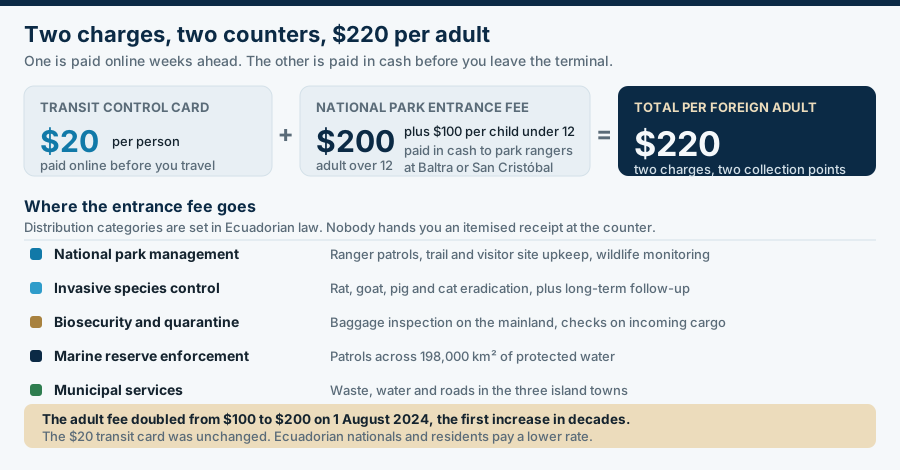
Foreign adults over 12 pay a US$200 national park entrance fee. Foreign children under 12 pay US$100. Separately, every traveller needs a Transit Control Card costing US$20, registered and paid online before travel. Ecuadorian nationals and residents pay lower rates set by the same tariff schedule.
The two charges get confused constantly, because they are collected at different points by different bodies. The Transit Control Card, often shortened to TCT, is handled online through the governing council's system before you fly. The park entrance fee is paid on landing, in person, to park rangers at Baltra or San Cristóbal, before you leave the terminal. Ecuador uses the US dollar, so plan to have the amount in notes rather than assuming a card reader.
That means a couple travelling together with one child under 12 is looking at $520 in fixed government charges before a single hotel night or boat ticket. It is not a small line item and it should go into your budget as its own row, not folded into "extras". The official park fee page is the authority on current amounts, and it is the only place worth checking if you see a different number quoted elsewhere.
| Charge | Amount | When and where you pay | Collected by |
|---|---|---|---|
| National park entrance, foreign adult over 12 | $200 | On arrival at Baltra or San Cristóbal | Park rangers, in person |
| National park entrance, foreign child under 12 | $100 | On arrival at Baltra or San Cristóbal | Park rangers, in person |
| Transit Control Card (TCT) | $20 per person | Online, before you travel | The governing council's CGREG system |
| Ecuadorian nationals and residents | Lower rate per the tariff schedule | On arrival | Park rangers, in person |
Why did the fee double in 2024?
The entrance fee had sat at $100 for decades while visitor numbers grew substantially. The increase to $200, effective 1 August 2024, was presented as a correction to decades of inflation and as a way to fund conservation and local services under pressure from the number of people arriving each year.
The scale of that pressure is the part worth sitting with. The islands recorded 290,404 visitors in 2025, about 4% up on the previous year, and the park directorate's own visitor report shows where they come from and how they travel. Ecuador itself supplies 38% of arrivals and the United States 29%, with the UK, Canada, Germany and Australia behind them.
The more telling number is the split between how people visit. In 2025, 79% of visitors stayed land-based and only 21% were on cruises. A generation ago that ratio ran the other way. Land-based tourism puts far more weight on the towns, on their water, waste and roads, than a cruise passenger who sleeps offshore does, and that shift is a large part of why the fee structure was revisited.
| Item | Before 1 August 2024 | Now |
|---|---|---|
| Foreign adult entrance fee | $100 | $200 |
| Foreign child under 12 | A lower rate under the previous schedule | $100 |
| Transit Control Card | $20 | $20 |
| Total for one adult | $120 | $220 |
| Last change before this one | Unchanged for decades | Effective 1 August 2024 |
What does the money actually fund?
The tariff is distributed by law between national park management, the marine reserve, biosecurity and quarantine work, and the provincial and municipal authorities on the inhabited islands. Nobody hands you an itemised receipt at the counter, but the categories are set in Ecuadorian legislation rather than decided ad hoc.
The most visible spending is the least glamorous. Invasive species control is the single largest ongoing conservation cost in the archipelago, because the threats do not stop arriving. Eradicating black rats from Pinzón in 2012 is why over 1,000 juvenile tortoises have been repatriated there and why hatchlings now survive in the wild. That work needs permanent funding, not a one-off grant.
Then there is enforcement across water. The Hermandad Marine Reserve, created on 14 January 2022, added 60,000 km² and brought the total protected marine area to 198,000 km². Patrolling that is expensive, and industrial fishing fleets sit at the edge of it. Meanwhile the municipalities on Santa Cruz, San Cristóbal and Isabela have to run water, waste and roads for a resident population plus 290,000 annual visitors.
| Where it goes | What that covers in practice |
|---|---|
| National park management | Ranger patrols, trail and visitor site maintenance, wildlife monitoring |
| Invasive species control | Rat, goat, pig and cat eradication programmes and long-term follow-up |
| Biosecurity and quarantine | Baggage inspection at mainland airports, checks on cargo entering the islands |
| Marine reserve enforcement | Patrols across 198,000 km² of protected water |
| Municipal and provincial services | Waste, water and infrastructure in the island towns |
Is $220 in entry charges actually a lot?
It depends entirely on your trip. Against a cruise it disappears into the rounding. Against a lean land-based week it is a real bite, roughly the price of one full day boat. The fee is fixed, so the shorter and cheaper your trip, the larger a share it takes.
That last point is the honest complaint. Someone spending $8,000 on a week aboard a small ship pays the same $220 as a backpacker doing five nights in Puerto Ayora. A flat charge is regressive by design, and the travellers most likely to feel it are the ones the islands have been trying to attract more of, not fewer.
| Trip style | Published daily range | Cost of 7 days | $220 entry charges as a share |
|---|---|---|---|
| Mid-range land-based island hopping | $250 to $350 per person | $1,750 to $2,450 | About 9% to 13% |
| Cruise, per-day pricing | $450 to $1,000+ per person | $3,150 to $7,000+ | About 3% to 7% |
| Cruise, weekly package pricing | $3,000 to $10,000+ per week | Same | About 2% to 7% |
| Reference point | A day tour from Santa Cruz runs $145 to $245 | The entry charges cost about one day boat |
Set against that, my own view after three trips is that the fee is defensible and the transit card is the part that feels like paperwork with a price on it. The park rules exist because the wildlife has no fear response, and the rules the fee pays to enforce are the reason a sea lion will still sleep on a bench in Puerto Baquerizo Moreno rather than fleeing. If you want the fee in the context of everything else you will spend, our full cost guide does the whole budget, and entry rules and flights covers the paperwork order.
How do you get the most out of what you have paid?
Use the days. The fee is charged once at the door regardless of whether you spend a week on the beach in Puerto Ayora or get out to the volcanoes, the marine sites and the outer islands. The travellers who feel short-changed are usually the ones who stayed in town.
Isabela is where the fee starts paying you back, because the landscape there is on a scale the smaller islands cannot match. The Sierra Negra volcano hike climbs to the rim of one of the largest active calderas anywhere, with a lava field beyond it that looks like nothing else in the archipelago, and you can check live availability & prices for your dates. The rest of what leaves Puerto Villamil is on our Isabela day tours page. Getting there is a ferry hop of two to two and a half hours from Santa Cruz for roughly $30 to $35 each way, which is the cheapest way to add a genuinely different island to a trip you have already paid the entrance on. If you are still deciding which mainland airport to route through, Quito versus Guayaquil covers that separately.
Can I pay the Galapagos park fee in advance?
No. The entrance fee is collected in person by park rangers at Baltra or San Cristóbal on arrival. Only the $20 Transit Control Card is paid online beforehand.Do children pay the park fee?
Yes. Foreign children under 12 pay $100, half the adult rate. The Transit Control Card is charged per person regardless of age.What happens if I do not have cash on arrival?
You cannot leave the terminal without paying, so this is not a queue to improvise in. Carry the amount in US dollar notes and do not rely on a card being accepted.Is the fee per visit or per day?
Per entry. You pay once when you arrive in the archipelago, and it covers your stay regardless of how many islands you visit or how long you stay.Does the fee include tours or guides?
No. It is an entrance charge only. Day boats, guides, hotels and inter-island ferries are all separate, and a park-authorised naturalist guide is required at protected visitor sites.The fee is not a ticket to an attraction. It is closer to a subscription to a place that needs permanent maintenance to stay the way you came to see it, and $200 buys a lot less of that than it sounds like.