The Galapagos is one of the great dive destinations on earth, and almost none of what makes it famous can be reached on a day trip.
Checked against the operators' listings by Oleg Galeev
Short answer
Day-accessible Galapagos diving means Kicker Rock, Gordon Rocks, Seymour and shore sites, reached from Santa Cruz or San Cristóbal. The legendary Darwin and Wolf sites with their whale sharks are liveaboard-only. Platform dive inventory is thin, so booking a dive shop directly is often the better route.
Every Galapagos diving listing we verified as live
Sorted by review count, which is the closest public proxy for how many people actually book each one. Ratings and review counts are the operators' own, read from the live listings.
Galapagos Discovery Diving ONE-DAY EXPERIENCE By CIG Tours
Every rated diving tours listing on GetYourGuide and Viator, by review count
Tour
Rating
Reviews
Duration
From
Galapagos Discovery Diving ONE-DAY EXPERIENCE By CIG Tours
3.9
9
7:00 am to 2:30 pm (approx. 7-8 hours)
Col$1,086,100 per person
Scuba Diving at Kicker Rock for Certified Divers
4.7
3
5 hours (approx.)
In booking flow
San Cristobal Galapagos Tours and Diving Day (PADI)
5
1
5 days (approx.)
In booking flow
This is the smallest and least satisfying category on the site, and it is more useful to say why than to dress it up.
The Galapagos deserves its reputation among divers. Cold nutrient-rich currents meet tropical water, and the result is hammerhead schools, whale sharks, sunfish and marine iguanas feeding underwater. But the sites that produce those encounters, Darwin and Wolf in the far north, sit a long overnight sail from the inhabited islands and are accessible only on a liveaboard. We do not sell liveaboards, and no honest day-tour page should imply otherwise.
What diving can you actually do on a day trip?
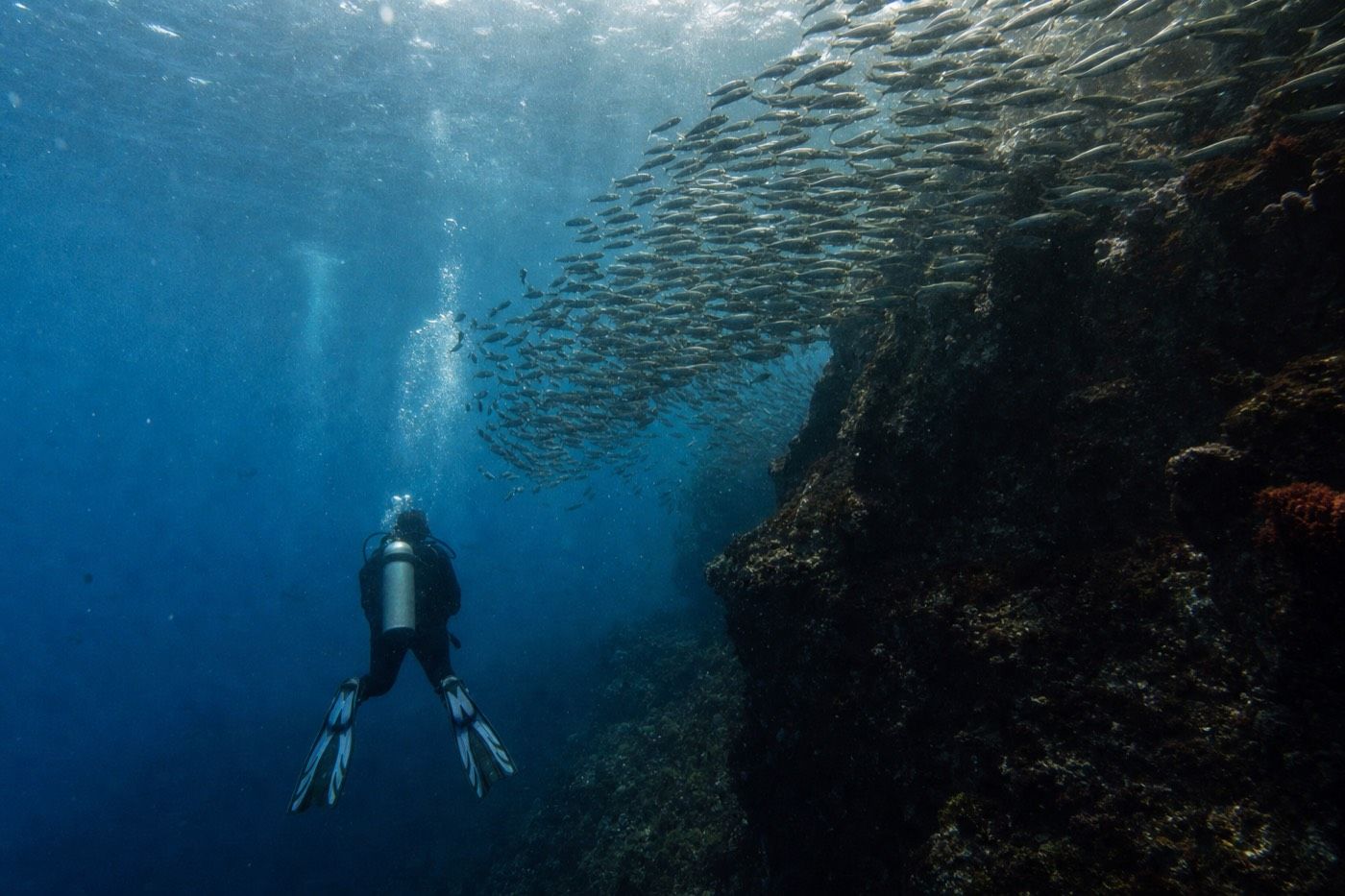
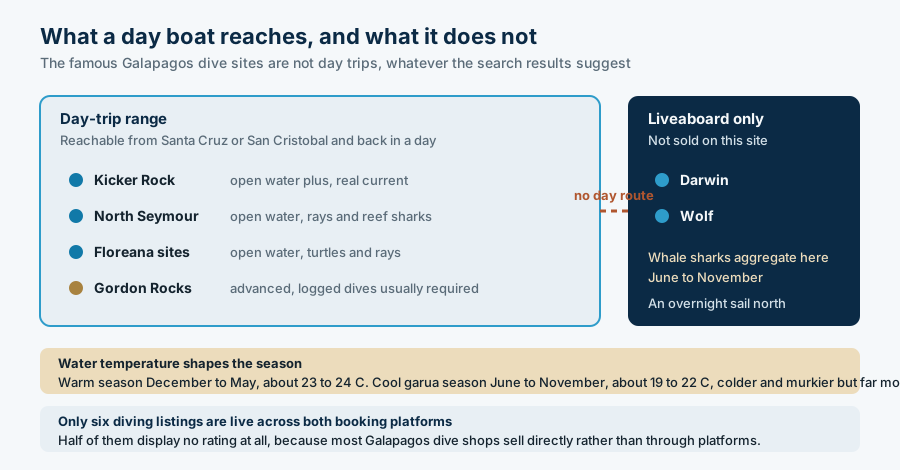
Kicker Rock off San Cristóbal, Gordon Rocks off Santa Cruz, North Seymour, Floreana and a handful of shore sites. These are genuinely good dives with sharks, turtles and rays. They are not Darwin and Wolf, and no day boat reaches those.
Gordon Rocks is the one most divers ask about. It is a submerged crater with strong, shifting currents and is widely treated as an advanced site: most operators want a meaningful number of logged dives before they will take you. Hammerheads are the draw and they are seasonal rather than certain.
Kicker Rock dives the same channel that snorkellers drift, but deeper and along the walls. It is more forgiving than Gordon Rocks while still involving current.
Site
Reached from
Level
Draw
Kicker Rock
San Cristóbal
Open water plus, comfortable in current
Hammerheads, Galapagos sharks, turtles
Gordon Rocks
Santa Cruz
Advanced, logged dives usually required
Hammerhead schools, strong current
North Seymour
Santa Cruz
Open water
Rays, reef sharks, garden eels
Floreana sites
Santa Cruz or Floreana
Open water
Turtles, rays, reef life
Darwin and Wolf
Liveaboard only, not day accessible
Advanced
Whale sharks, June to November
Why is there so little diving on the booking platforms?
Because Galapagos dive shops mostly sell directly. Diving requires certification checks, equipment sizing and a briefing that platform booking flows handle badly, so the good operators keep it in-house. What reaches GetYourGuide and Viator is a thin slice, and the review data reflects that.
We verified six live diving listings. The best-reviewed has nine reviews. Three display no rating at all. That is not us picking badly, it is the whole of what exists on these two platforms.
So here is advice against our own commercial interest: if diving is the reason you are going to the Galapagos, contact a dive shop in Puerto Ayora or Puerto Baquerizo Moreno directly, or book a liveaboard through a specialist. Use the listings below if you want a single dive day slotted into an otherwise land-based trip, which is a perfectly reasonable thing to want.
Where the famous sites actually sit relative to the ones a day boat can reach.
What does Galapagos diving cost, and how does it compare?
A two-tank day dive from the inhabited islands typically runs a few hundred dollars once gear is included, while a week-long liveaboard to Darwin and Wolf runs into the thousands. The gap reflects distance and boat time rather than dive quality alone.
Option
Typical shape
Sites reached
Booking route
Single day dive
2 tanks, half to full day
Kicker Rock, Seymour, Floreana
Platform or dive shop
Multi-day dive package
4 to 6 days, hotel based
Adds Gordon Rocks, Mosquera
Usually dive shop direct
Liveaboard
7 to 8 nights aboard
Darwin, Wolf, Fernandina
Specialist agent only
Certification checks are non-negotiable at the better shops, and a logbook showing recent dives matters for the sites with current. The wildlife guide covers what is realistically visible without scuba at all.
Do you need a wetsuit in the Galapagos?
Yes, essentially always. Water temperature ranges from about 19°C in the cool garúa season to 24°C in the warm season, and the currents that make the diving good are the same ones that make it cold. Operators supply wetsuits, but check the thickness offered if you feel the cold.
Season
Months
Water temperature
What it means for diving
Warm
December to May
About 23 to 24°C
Clearer, calmer, quieter underwater
Cool garúa
June to November
About 19 to 22°C
Colder and murkier, far more large marine life
Whale shark window
June to November
Coldest end of the range
Darwin and Wolf only, liveaboard access
The seasonal trade is genuine. June to November brings colder, richer, murkier water with far more large marine life, including the whale shark season in the north. December to May brings warmer, clearer, calmer water with less action. Most divers take the cold and the reduced visibility for the animals.
If you are combining diving with the rest of a trip, our diving guide goes deeper on certification, seasonality and what to expect, and the best time to visit guide covers how the two seasons feel above water.
For a single dive day added to a land-based trip from Santa Cruz, the one-day discovery experience is the most reviewed thing here, though nine reviews is a small sample by any measure. You can check live availability & prices on GetYourGuide, and it is worth messaging the operator about certification requirements before booking.
Can non-divers still see the good stuff?
Largely, yes, and this is the honest good news. Kicker Rock, Los Túneles and most day-boat snorkel stops put you with sea lions, turtles, rays and white-tipped reef sharks in a few metres of water. The species that need scuba are hammerhead schools, sunfish and whale sharks.
Snorkelling in the Galapagos is unusually rewarding because the animals are unafraid. Under the park's visitor rules you keep two metres away, which in practice means backing off from curious sea lions rather than approaching anything. The marine reserve those animals live in is enormous: the Hermandad expansion in January 2022 added 60,000 km² and brought the total protected area to 198,000 km².
Some sites yes, the famous ones no. North Seymour and parts of Floreana suit open-water divers. Gordon Rocks and Darwin and Wolf involve currents that most operators will not take newly certified divers into. Discover-scuba style experiences exist here but the archipelago is a poor place to learn, because current handling matters.
When is whale shark season in the Galapagos?
June to November, at Darwin and Wolf in the far north. Those sites are liveaboard-only and cannot be reached from the inhabited islands on a day trip. Anyone advertising a day trip to see whale sharks at Darwin is not describing something that exists.
Is it cheaper to book diving on arrival?
Often, and you also get to talk to the shop about conditions and your experience level first. The trade is availability: dive boats are small and peak weeks fill. Booking one dive day ahead and arranging the rest locally is a reasonable middle path.
Why do three of these listings show no rating?
Because the platform shows none. They are real, currently bookable products with too few completed bookings to display a rating. We list them as they are rather than hiding them or implying a quality we cannot evidence.