Where to Stay in the Galapagos
Three port towns take almost every land-based visitor. They are not interchangeable. Your choice of town sets your ferry days, your budget and the list of day tours you can actually board.
 Written with Oleg Galeev, Galapagos travel writer, three trips to the islands
Short answer
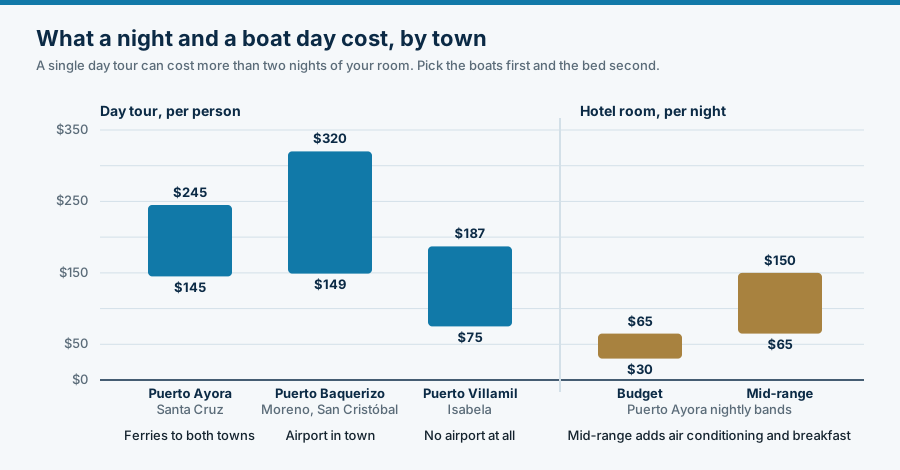
Puerto Ayora on Santa Cruz has the most hotels, restaurants and day tours, and sits at the centre of the ferry network. Puerto Baquerizo Moreno on San Cristóbal is quieter with sea lions on the pier. Puerto Villamil on Isabela is the smallest and cheapest to tour from. Budget rooms start around $30 to $65, mid-range runs $65 to $150.
Puerto Ayora after dark is louder than anyone expects from a national park town. Restaurants push tables into the side streets, the grills come out, and there is a steady procession of people walking back from the pier with wet hair and dry bags. I have stayed on Santa Cruz and it took me one evening to understand something that no booking site tells you: on these islands the hotel is not a place you sleep, it is the thing that decides which boats you can get on.
Three port towns absorb almost the entire land-based visitor flow. They are genuinely different, and picking the wrong one costs you ferry days.
Which Galapagos town should you actually stay in?
Puerto Ayora on Santa Cruz for choice and connections, since it sits at the centre of the ferry network and has by far the most hotels, restaurants and departing day tours. Puerto Baquerizo Moreno on San Cristóbal for a quieter, prettier waterfront. Puerto Villamil on Isabela for the cheapest day tours and the slowest pace.
Puerto Ayora is the practical default, and roughly the only place where you can turn up without a fixed plan and still fill a week. It has a working harbour, a supermarket, a hospital, dive shops, restaurants at every price point and the widest selection of day boats. It is also the noisiest, the busiest and the most built-up, and if you came for silence you will not find it here.
Puerto Baquerizo Moreno is the capital, and it feels like a small provincial town that happens to have sea lions asleep on the benches. The malecón is genuinely lovely at dusk. There are fewer restaurants and fewer boats, but the beach is right there, and the interpretation centre and Tijeretas walk start from the edge of town on foot.
Puerto Villamil is a sandy grid of low buildings with a lagoon full of flamingos on one side and the volcano behind. It is the smallest, and it closes early. Day tours from here are the cheapest in the archipelago, partly because the sites are close.
| Puerto Ayora | Puerto Baquerizo Moreno | Puerto Villamil | |
|---|---|---|---|
| Island | Santa Cruz | San Cristóbal | Isabela |
| Airport | Baltra, plus a bus and ferry | San Cristóbal, in town | None, ferry only |
| Ferry links | Direct to both other towns | Direct to Santa Cruz only | Direct to Santa Cruz only |
| Hotel choice | Widest, all price bands | Moderate | Smallest, fills up fast |
| Day tours departing | Most of the archipelago's day boats | Kicker Rock and 360 circuits | Tintoreras, Los Túneles, Sierra Negra |
| Typical day tour price | $145 to $245 | $149 to $320 | $75 to $187 |
| After dark | Busy, restaurants open late | Quiet waterfront, sea lions everywhere | Very quiet, closes early |
What do Galapagos hotels actually cost?
Budget rooms in Puerto Ayora run about $30 to $65 a night, and mid-range hotels about $65 to $150. The cheaper end means a fan, a small room and a shared or basic bathroom. The mid band buys air conditioning, hot water that works and usually breakfast. Prices climb sharply above that for the few properties with a sea view.
Two things distort the market here. Everything on the islands is shipped in, so a room that would cost $40 on the mainland costs $70 here for the same fittings. And inventory is small, so the good mid-range places sell out in the high season while the weaker ones sit empty at full price.
Air conditioning is the line item that matters most in the warm months from December to May, when it is humid and still at night. In the cool garúa season you can live without it. Hot water is less universal than you would assume, and in that climate you may not care.
| Band | Nightly price | What that buys | Where it works |
|---|---|---|---|
| Budget | About $30 to $65 | Fan, small room, simple bathroom, few frills | Backpackers, short stays, sleepers who are out all day |
| Mid-range | About $65 to $150 | Air conditioning, reliable hot water, breakfast, better location | Most visitors, families, anyone staying a week |
| Above that | Higher, limited stock | Sea view, larger rooms, pool at a handful of properties | Special occasions, cruise pre-nights |
Set that against the fixed costs before you build a budget. The park entrance fee alone is US$200 per foreign adult, paid in cash on arrival under the official park tribute rules, plus a US$20 Transit Control Card bought online in advance. The rest of the arithmetic sits in the Galapagos tour cost guide.
How far from the pier should your hotel be?
Close, in Puerto Ayora and Puerto Baquerizo Moreno. Most day tours meet at or near the main pier between 7 and 8am, and a hotel within a ten-minute walk removes taxis, timing anxiety and a very early alarm. In Puerto Villamil the town is small enough that distance barely matters.
Puerto Ayora is strung along a waterfront road, and the walk from the far end of town to the pier can take twenty-five minutes in heat, carrying a day bag and snorkel gear. That is fine once. It is annoying every morning for a week. Hotels one or two blocks back from the water are usually cheaper than the waterfront and still within a few minutes' walk, which is the sweet spot.
There is a second distance that catches people out. If you fly into Baltra, getting to Puerto Ayora means a bus to the Itabaca channel, a small ferry across, then a bus or taxi over the highlands. Budget around two hours from the plane to your room, and do not book anything for that first morning.
Puerto Baquerizo Moreno is easier, because the airport is a short taxi ride from town and most hotels are within a few blocks of the malecón. Puerto Villamil has the opposite problem: no airport at all, so you arrive by ferry from Santa Cruz and the crossing takes 2 to 2.5 hours.
Does your hotel really decide which day tours you can take?
Yes, more than anything else in the trip. Day boats depart from the pier of the town they are based in, usually early, and there is no practical way to reach a Kicker Rock departure from Isabela or a Sierra Negra hike from San Cristóbal on the same morning. Your base defines your shortlist.
This is the part most people work out too late. Ferries run once or twice a day, take 2 to 2.5 hours and cost about $30 to $35 each way, so a tour based in another town is not a day trip, it is a relocation. The exception is the long Isabela day trip from Santa Cruz, which builds the crossing into a ten-hour day and charges accordingly.
If you are based in Puerto Ayora and want a low-commitment half day, the Santa Cruz bay tour boards near the town pier and runs about three hours around Academy Bay with snorkelling and rock formations, which makes it the natural arrival-day or departure-day filler. You can check live availability & prices on the operator's listing. The full departure list for the town is on the Santa Cruz day tours page.
| Your base | Day tours you can board directly | Needs a ferry or a relocation |
|---|---|---|
| Puerto Ayora, Santa Cruz | Bay tour, highlands and lava tunnels, Pinzón, Santa Fe, Bartolomé, North Seymour | Sierra Negra, Los Túneles, Kicker Rock |
| Puerto Baquerizo Moreno, San Cristóbal | Kicker Rock, 360 circuit, Tijeretas and interpretation centre on foot | Everything on Santa Cruz and Isabela |
| Puerto Villamil, Isabela | Tintoreras, Los Túneles, Sierra Negra, Concha de Perla on foot | Everything on Santa Cruz and San Cristóbal |
What are the three towns like at night?
Puerto Ayora stays awake: restaurants open late, street kitchens fill the side roads and there is a bar scene of sorts. Puerto Baquerizo Moreno is quieter and centred on the waterfront, with sea lions barking through the night. Puerto Villamil is close to silent after about nine, which is either the point or the problem.
Ecuador as a whole sits at Level 2, Exercise Increased Caution, on the US State Department travel advisory, and the Galapagos are consistently the calmest part of the country to move around in. Walking back to a hotel after dinner in any of the three towns is unremarkable. Normal small-town sense applies and not much more.
The sea lions are the real nightlife variable. In Puerto Baquerizo Moreno they haul out on the beach, the steps and occasionally the boats, and they are loud. A waterfront room there is a lovely idea until about 3am. The Conservancy's trip planning pages are worth reading alongside this for the practical side of island logistics.
Should you split your stay across islands?
If you have more than four or five nights, yes. Two or three nights in each of two towns gives you a genuinely different set of day tours and landscapes. Under four nights, stay in one place, because a ferry day costs you most of a touring day in each direction.
The network shape matters. Santa Cruz is the hub, with direct ferries to both San Cristóbal and Isabela. There is no direct Isabela to San Cristóbal route, so going between those two means transferring through Puerto Ayora and usually losing a full day. Sequence your islands to avoid backtracking, and put the town you are flying home from last.
A split also spreads the cost, since Isabela's day tours start around $75 while San Cristóbal's run up to $320. The mechanics of the crossings, the luggage rules on the lanchas and the morning-versus-afternoon question are all in the island hopping guide, and if you are still deciding between the islands themselves, the which island to stay on guide compares them on landscape rather than logistics.
Common questions
Do I need to book Galapagos hotels in advance?
In the high season, yes, because inventory in all three towns is small and the well-run mid-range places fill first. Outside the peak weeks you can often arrive and find a room, but you will spend the first hours of your trip walking around with a bag instead of on the water.
Is Puerto Ayora too busy?
It is the busiest of the three by a wide margin, with the most traffic, the most restaurants and the most people on the pier at 7am. That is precisely why it has the most day boats. If the noise bothers you, stay a couple of blocks back from the waterfront rather than switching islands.
Can I stay somewhere other than the three port towns?
There is limited accommodation in the Santa Cruz highlands and a very small amount on Floreana, but the port towns hold almost all of it. Staying outside them means arranging transport for every departure, which undoes most of the appeal.
How much should I budget per day including a hotel?
Mid-range land-based island hopping typically works out around $250 to $350 per person per day once you include the room, food, a day tour and local transport. A budget room and a cheaper Isabela tour day pulls that well below the range; a San Cristóbal boat day pushes it above.
Which town is best for a first Galapagos trip?
Puerto Ayora, for almost everyone. It has the most departures, the most fallback options if a boat cancels, and direct ferries to both other islands, so a plan that changes mid-trip still works from there.