Galapagos Island Hopping: How It Actually Works
Four in five visitors now travel land-based, which makes the small fibreglass ferries between the islands the real backbone of a Galapagos trip. They are cheap, they are not comfortable, and the network has a shape you need to plan around.
 Written with Oleg Galeev, Galapagos travel writer, three trips to the islands
Short answer
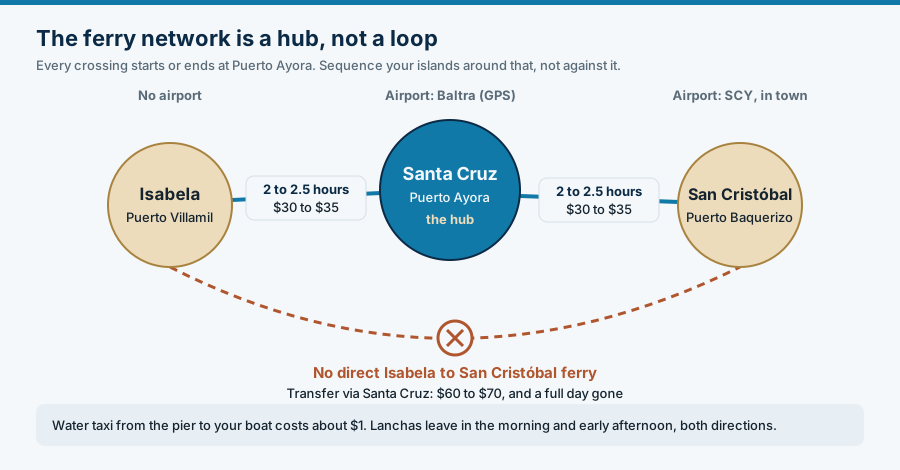
Santa Cruz is the hub. Ferries run Santa Cruz to Isabela and Santa Cruz to San Cristóbal for about $30 to $35 one way, taking 2 to 2.5 hours in small open-sea boats. There is no direct Isabela to San Cristóbal route, so that journey means transferring through Puerto Ayora and usually losing a day.
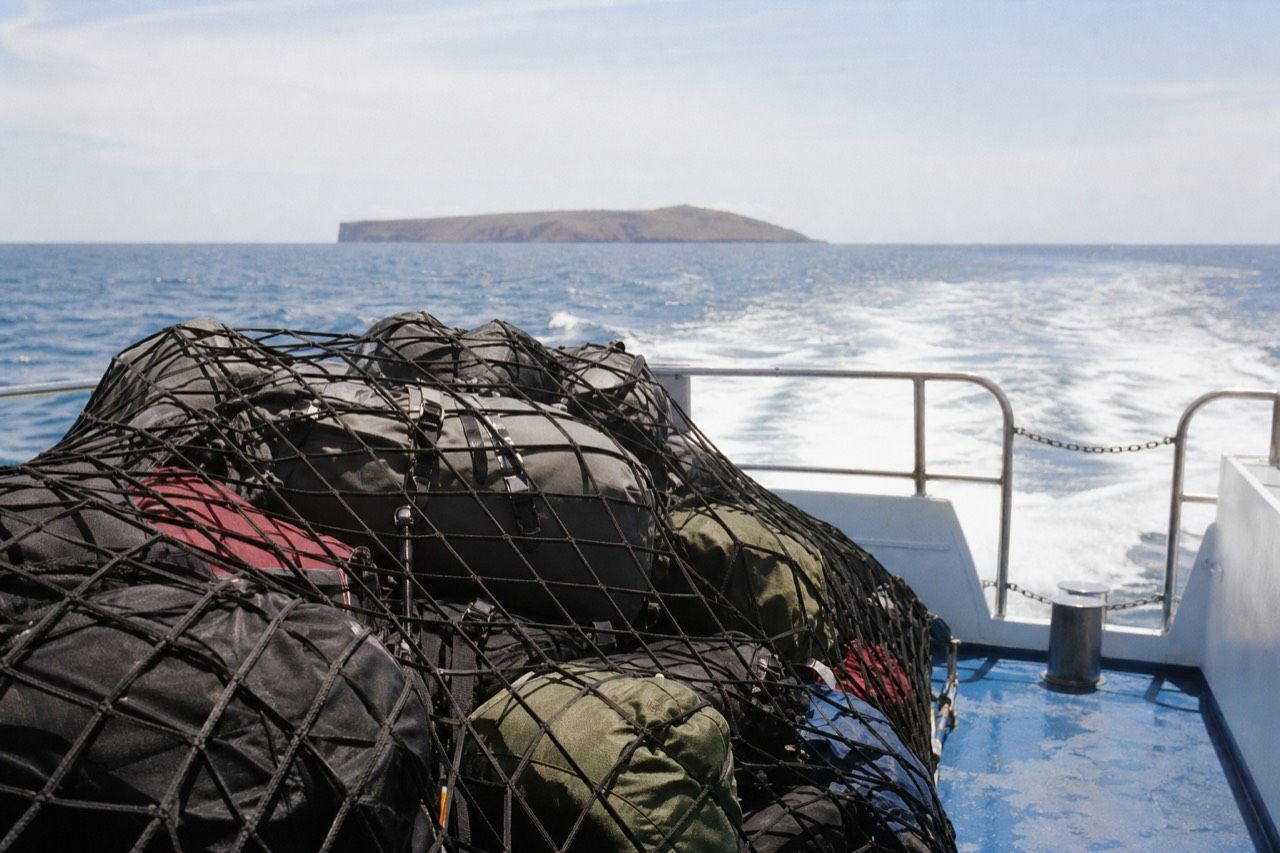
The lancha to the next island is a fibreglass speedboat with two or three outboards, about twenty seats under a low roof, and a bow where your bag goes under a tarp with everyone else's. On my land-based trip in 2021 I learned the sequence the way everyone does: turn up at the pier early, hand your bag over, take a water taxi out to the boat because it cannot come alongside, then sit down and hold on for two hours of open ocean. It costs around thirty dollars. It is the single least glamorous part of a Galapagos trip and it is also the thing the entire land-based model runs on.
Four out of five visitors are now doing exactly this, so it is worth understanding the network before you build an itinerary that fights it.
How does the Galapagos ferry network actually work?
As a hub and spoke, with Santa Cruz in the middle. Public lanchas connect Puerto Ayora to Puerto Villamil on Isabela and to Puerto Baquerizo Moreno on San Cristóbal, each about $30 to $35 one way and 2 to 2.5 hours. Routes generally run once in the morning and once in the early afternoon.
These are not ferries in the European sense. They are small passenger speedboats, open to the swell, with fixed seats and no deck to walk around. Crossing time depends on sea state more than on distance, and in the cool garúa season the ride is bumpier because the wind is up.
Boarding takes longer than you expect. Boats moor off the pier, so a water taxi shuttles you out for a small fee, usually a dollar, and luggage goes on ahead. Budget half an hour of standing around at each end on top of the crossing itself, plus the time it takes to get from the pier to your hotel.
The 290,404 people who visited in 2025 were 79% land-based, which means this network carries an enormous share of Galapagos tourism on boats that seat twenty. Capacity is finite on popular days. Buy the ticket a day ahead through your hotel or an agency on the waterfront rather than turning up at the pier hoping.
| Route | One way | Crossing time | Frequency |
|---|---|---|---|
| Santa Cruz to Isabela | About $30 to $35 | 2 to 2.5 hours | Morning and early afternoon |
| Santa Cruz to San Cristóbal | About $30 to $35 | 2 to 2.5 hours | Morning and early afternoon |
| Isabela to San Cristóbal | No direct service | Not available | Transfer via Santa Cruz |
| Water taxi, pier to boat | About $1 | A few minutes | On demand at each pier |
Which island-hopping routes do not exist?
The one people always want: Isabela directly to San Cristóbal. There is no such service. Getting between the two outer inhabited islands means a crossing into Puerto Ayora, a wait, and a second crossing out, which in practice consumes an entire day and sometimes an overnight in Santa Cruz.
This single gap should shape your whole itinerary. An efficient trip treats Santa Cruz as the pivot and never tries to cut the corner. Go out to one outer island, come back, go out to the other, come back, and fly home from whichever airport suits.
There is also an airport gap. Isabela has no commercial airport connection to the mainland, so every visit to Puerto Villamil begins and ends with a boat. San Cristóbal and Baltra both have flights to Quito and Guayaquil, which gives you flexibility on the outbound leg if you plan it early. Fares to the islands commonly run $250 to $600 round trip.
If a full relocation to Isabela does not fit your dates, there is a middle path. The long Isabela day trip with Tintoreras, the wetlands and flamingos builds both crossings into a single ten-hour day out of Santa Cruz, so you see the island without changing hotel or paying for two ferry tickets separately, and you can check live availability & prices on the operator's listing. It is a long day and an early alarm. It is also the most efficient way to add a third island to a short trip. Everything departing from Puerto Villamil itself is on the Isabela day tours page.
Morning or afternoon crossing, and what about luggage?
Take the morning boat where you can. The sea generally builds through the day, so the early departure tends to be the calmer ride, and arriving before lunch leaves you an afternoon rather than a wasted evening. Luggage is stowed on the bow under a tarp, so anything you care about goes in a waterproof bag on your lap.
Seasickness is a genuine consideration on this route, not a joke. Two hours in a small boat crossing open water between islands affects a fair number of people, and there is nowhere to go. If you are prone to it, take something before boarding rather than after, sit as far from the stern as you can, keep your eyes on the horizon, and pick a morning departure.
The luggage rule is simple and people learn it the hard way. Spray comes over the bow. Bags stacked there get wet even under the tarp, so pack electronics, documents, cameras and anything that must stay dry in a drybag or a sealed liner that stays with you in the cabin. Soft bags stack better than hard cases and are less likely to be left behind.
Watch what you carry between islands, too. Fresh fruit, seeds, plants and many animal products are restricted or banned across the archipelago, and the biosecurity agency publishes the current product list. Buying a bag of fruit for the boat is a bad idea in principle here.
| Item | Where it should be | Why |
|---|---|---|
| Passport, cash, Transit Control Card | On you, in a dry pouch | Bow luggage gets wet and out of reach |
| Camera and electronics | Drybag on your lap | Spray over the bow is normal, not exceptional |
| Seasickness tablets | Taken before boarding | Too late once the boat is moving |
| Main luggage | Handed over at the pier, stowed on the bow | Soft bags stack better than hard cases |
| Fresh fruit, seeds, plants | Left behind | Restricted or banned under the biosecurity list |
How should you sequence the islands?
Put Santa Cruz first and last, since it is the hub and the arrival airport at Baltra feeds into it. Give each outer island at least two nights, because a one-night stay is swallowed by the two crossings. Fly home from the island you finish on, and never plan a ferry on the morning of your flight.
The most common mistake is treating a crossing as a transfer rather than a day. It is a day. By the time you have checked out, taken a water taxi, crossed, landed, found your hotel and eaten, the useful part of the afternoon is what remains. Two islands over five nights works. Three islands over five nights does not.
The other trap is booking a ferry the morning of your flight. Crossings get cancelled for weather, especially in the cool season, and a missed international connection is a bad way to end the trip. Sleep on the island you fly from.
| Trip length | Sensible sequence | What you get |
|---|---|---|
| 4 nights | Santa Cruz only | Highlands, tortoises, bay tour, one boat day, no ferry time lost |
| 5 to 6 nights | Santa Cruz, then one outer island, back to Santa Cruz | Two islands, one crossing each way, a full day still lost to travel |
| 7 to 8 nights | Santa Cruz, Isabela, Santa Cruz, San Cristóbal, fly out | All three port towns, two return crossings |
| 10 nights or more | Same sequence with slack days built in | Room for a cancelled crossing and a full dive or hike day |
How many days you actually need is its own question, worked through in the how many days guide, and if you are still choosing between the islands themselves, the which island to stay on guide compares them on landscape and character rather than logistics.
Is island hopping cheaper than a cruise?
Substantially, yes. Mid-range land-based island hopping runs about $250 to $350 per person per day once you count hotels, food, day tours and ferries. Cruises run roughly $450 to $1,000 or more per person per day, which works out at $3,000 to $10,000 and up for a week.
What the extra money buys on a cruise is reach. Cruise itineraries visit outer islands like Española, Genovesa and Fernandina that no day boat from a port town can get to, and you wake up at a new site instead of spending a morning crossing to it. That is a real advantage and the honest reason cruises still exist alongside a cheaper alternative.
What island hopping buys is flexibility and money staying on the islands. You choose each day as it comes, you can cancel a boat day if the weather turns, and you eat where residents eat. It also lets you scale the cost, since day tours from Isabela start around $75 while San Cristóbal boats run up to $320.
Packaged versions sit between the two. A six-day all-inclusive island-hopping itinerary listed at $1,983 bundles the ferries, hotels and day tours into one booking, which lands at roughly $330 a day, right at the top of the mid-range band. You pay a premium for someone else doing the sequencing.
| Land-based island hopping | Packaged island hopping | Cruise | |
|---|---|---|---|
| Cost per person per day | About $250 to $350 | About $330 on a listed 6-day package | About $450 to $1,000+ |
| Cost per week | Roughly $1,750 to $2,450 | $1,983 for six days | $3,000 to $10,000+ |
| Islands reachable | Three port towns plus day-boat sites | Same, pre-sequenced | Outer islands day boats cannot reach |
| Flexibility | High, decide day by day | Low, fixed itinerary | None once aboard |
| Share of 2025 visitors | 79% land-based | Counted within land-based | 21% |
Both models still carry the same fixed entry costs. Every foreign adult pays the US$200 park entrance fee in cash on arrival under the official park rules, children under 12 pay US$100, and the US$20 Transit Control Card is bought online before you fly. The full side-by-side is in the cruise versus land-based comparison.
Common questions
Do I need to book the inter-island ferry in advance?
A day ahead is usually enough, arranged through your hotel or an agency on the waterfront. Seats are finite on small boats and popular departures do sell out in the high season, so turning up at the pier without a ticket is a gamble you do not need to take.
How rough is the crossing really?
Rough enough that seasickness tablets are a standard part of the packing list. Two hours of open water in a small speedboat is not a smooth ride, particularly in the cool season when the wind is stronger. Morning departures are generally calmer than afternoon ones.
Can I fly between the islands instead?
Small inter-island flights do operate on some routes and cost far more than the boat while saving most of the crossing time. They also carry tight baggage limits. Most land-based visitors use the lanchas, which is why the fares and timetables above describe the boats.
Is one night on an outer island enough?
No. Two crossings of 2 to 2.5 hours either side of a single night leaves you almost no touring time, and you pay two ferry fares for it. Give any outer island two nights minimum, or take a long day trip from Santa Cruz instead and keep your hotel.
What happens if my ferry is cancelled?
You wait for the next departure, which may be the following morning. This is exactly why you should never schedule a crossing on the day of your flight home. Build a night of slack on the island you are flying from and the risk disappears.