The Floreana Affair: The Galapagos Murder Mystery Nobody Solved
Three sets of settlers, two disappearances, two bodies on a waterless islet and one poisoning. What is documented about the 1934 Floreana case, what is only claimed, and what you can see on the island now.
 By Oleg Galeev, Galapagos travel writer, three trips to the islands
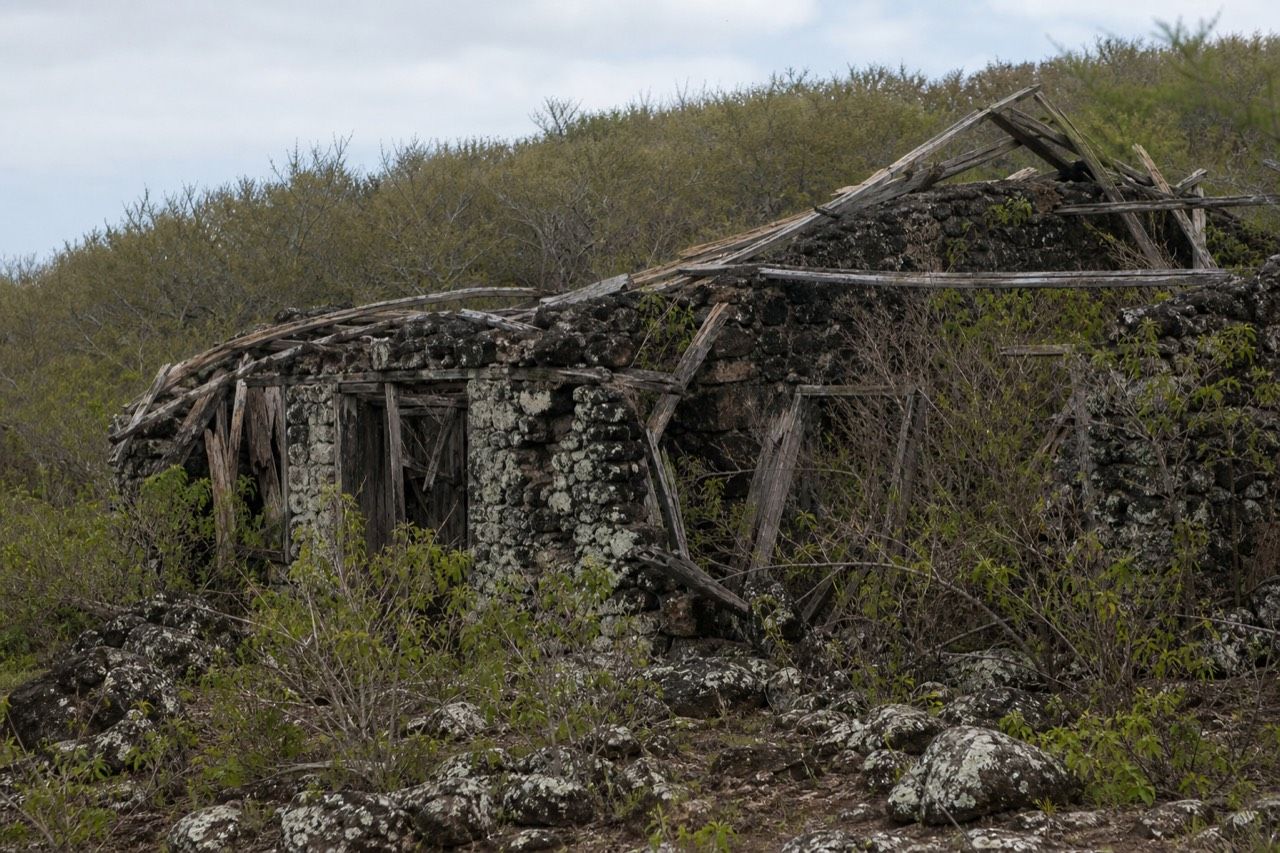
Three sets of Europeans moved to an uninhabited Galapagos island between 1929 and 1932. By the end of 1934 two of them had vanished and were never found, two more were dead on a waterless islet in the north of the archipelago, and a vegetarian doctor had died after eating spoiled potted meat. Nobody was charged with anything. In Puerto Ayora, where I have spent most of my time on three visits to the islands, the story still comes up in conversation the way local ghost stories do everywhere, half told and never finished. Screen versions keep reviving it, first a 2013 feature documentary built from the settlers' own letters and diaries, then a 2024 dramatised film. Both of them have to make choices the historical record does not support. This piece tries not to.
Who actually lived on Floreana in the early 1930s?
Floreana had no permanent residents when Dr Friedrich Ritter and Dore Strauch arrived in 1929. Within three years two more parties had joined them: the Wittmer family from Cologne, and a woman styling herself Baroness Eloise Wagner de Bosquet, who brought two German companions and plans for a luxury hotel.
Ritter was a Berlin doctor with a taste for Nietzsche and a theory that fruit, vegetables and hard physical work would let him live to a great age. He left his wife. Strauch, his former patient, left her husband. They called their smallholding Frido, a splice of their two names, and gave interviews to visiting yacht owners that European and American newspapers turned into a running serial about the Adam and Eve of the Galapagos.
That publicity brought the others. The Wittmers wanted a healthier climate for Heinz's teenage son Harry. The Baroness wanted something harder to name. She carried a revolver, called herself Empress of Floreana in front of visiting sailors, and announced a hotel for wealthy Americans that never opened.
| Person | Arrived | Background | What became of them |
|---|---|---|---|
| Friedrich Ritter | September 1929 | Berlin doctor, vegetarian, left his wife in Germany | Died on Floreana in November 1934 |
| Dore Strauch | September 1929 | Ritter's former patient, left her husband, had multiple sclerosis | Returned to Germany, published her account, died in 1943 |
| Heinz and Margret Wittmer | August 1932 | Cologne couple with Heinz's teenage son Harry; Margret arrived pregnant | Stayed on the island; Margret died there in 2000 |
| "Baroness" Eloise Wagner de Bosquet | October 1932 | Austrian-born, had run a Paris shop; the title was never documented | Disappeared in March 1934, never found |
| Robert Philippson | October 1932 | Her favoured companion | Disappeared with her, never found |
| Rudolf Lorenz | October 1932 | Her second companion, steadily pushed aside | Died on Marchena; body found in November 1934 |
What happened during 1934, in the order it is documented?
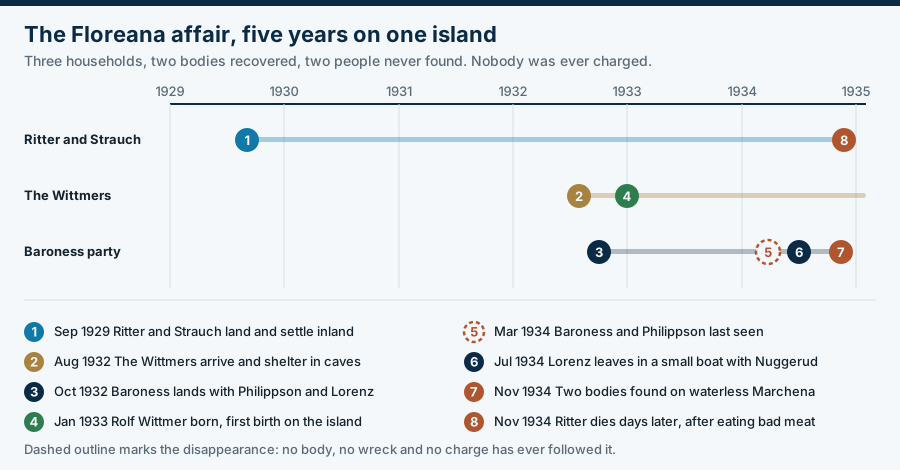
Two people vanished in late March 1934 with no body and no wreck. One of the survivors left the island in July and was found dead on Marchena in November. Four days after that discovery, Ritter died of poisoning. Everything between those fixed points comes from memoirs written by people with reasons to shape them.
The fixed points matter, because almost every retelling blurs them. The disappearance rests entirely on Margret Wittmer's account: friends had arrived on a yacht, the Baroness said, and she was leaving for Tahiti. No passing vessel logged a call at Floreana that week. Her possessions stayed behind, including things she had refused to travel without. Lorenz then sold off what she had left, which is not the behaviour of a man expecting her back.
| Date | Event |
|---|---|
| September 1929 | Ritter and Strauch land and settle near a highland spring |
| 1930 to 1931 | Press coverage abroad turns the pair into minor celebrities |
| August 1932 | The Wittmers arrive and shelter in old pirate caves inland |
| October 1932 | The Baroness lands with Philippson, Lorenz and an Ecuadorian helper who soon leaves |
| January 1933 | Rolf Wittmer is born, the first birth recorded on the island |
| 1933 | Water runs short, tempers fray, the hotel project stalls permanently |
| Late March 1934 | The Baroness and Philippson are last seen |
| July 1934 | Lorenz leaves with Norwegian fisherman Trygve Nuggerud in a small boat |
| November 1934 | Two mummified bodies are found on Marchena; days later Ritter dies |
| 1935 onward | Enquiries close without charges; the surviving settlers publish rival memoirs |
Did the Baroness really sail away to Tahiti?
Almost certainly not. No ship recorded taking her, nothing consistent with a planned departure was missing from her house, and she never surfaced anywhere afterwards. What replaced that story is a set of theories, none of which has ever been supported by a body, a confession or a charge.
This is the point where most accounts pick a villain, and where the honest answer is that the evidence stops. Ecuadorian officials and visiting naval and consular parties looked into it. The file closed. Both surviving households then published books, and the books contradict each other on the details that would matter most in a courtroom.
| Theory | What supports it | What works against it |
|---|---|---|
| She left on a passing yacht | Margret Wittmer's account, given consistently for decades | No vessel logged the call; she left belongings behind; she never appeared in Tahiti or anywhere else |
| Lorenz killed the pair | He had been humiliated and excluded, sold her goods, and left in obvious haste | No bodies, no confession, and he died before anyone could question him properly |
| The Wittmers were involved | They were the last to see her and supplied the only version of events | No physical evidence, no motive that survives scrutiny, and nothing to gain from the attention |
| Accident, illness or an unrecorded departure | Fishing boats and private yachts called irregularly and kept no formal manifests | Does not explain the abandoned possessions or the silence afterwards |
Ritter's death is a separate puzzle folded into the same story. He ate potted chicken that had gone bad, which for a man who had spent five years insisting on a vegetarian diet is strange on its own. Strauch and Margret Wittmer both described his final hours, and described them differently: one a scene of hatred, the other something calmer. Neither version can be checked.
Can you visit Floreana today, and what is actually there?
Yes. Floreana has a small permanent community at Puerto Velasco Ibarra and several visitor sites, including Post Office Bay with its centuries-old mail barrel and the highland caves the Wittmers first lived in. Visits to protected sites need a park-authorised naturalist guide, so most people come on an organised day boat or a cruise stop.
The island is quiet in a way Santa Cruz no longer is. Two things drive interest now: the human story, and a genuine conservation milestone. In February 2026 the park released 158 juvenile tortoises of the Floreana lineage, the first time that bloodline has walked the island in more than 180 years, after decades of captive breeding rebuilt it from a handful of hybrid founders. The Floreana reintroduction project has been running long enough that some of the people who started it never saw this stage of it. If that side of the archipelago interests you more than the murders, the wider picture is in our piece on how many giant tortoises are left.
Practically, Floreana is awkward. It is not a place you slot into a spare afternoon, and the park's visitor rules apply in full, including the two-metre wildlife distance and the guide requirement at protected sites. Travellers who want the empty-island feeling without the logistics usually end up on Isabela instead, which has the most dramatic landscape of the inhabited islands. For a half-day version of that, the Tintoreras day tour runs from Puerto Villamil to a lava islet where white-tip reef sharks rest in the channels, and you can check live availability & prices before you commit to the ferry. The rest of what leaves from that harbour sits on our Isabela day tours page.
Why has nobody solved it?
Because the case never had physical evidence. Two people vanished from an island with no police, no coroner and no reliable record of shipping calls. Everyone who could have testified was either dead within months or writing a book that also served as a defence.
The affair survives as a story precisely because it resists a solution. Dore Strauch published her version in 1936 and died in Germany a few years later. Margret Wittmer published hers in 1959, raised a family on the island and lived there until 2000. Both are readable, both are partisan, and where they conflict there is no third source to break the tie.
What the case illustrates, better than any brochure, is how thin the human layer on these islands really is. Fresh water shaped every settlement attempt in Galapagos history, and it still shapes where you can sleep today. If you are working out how to string the inhabited islands together, our island hopping guide covers the ferry logic, and which island to stay on compares the three towns honestly. The Galapagos Conservancy's planning pages are a sober counterweight to tour marketing.
Was anyone ever charged over the Floreana disappearances?
No. Ecuadorian authorities and visiting officials made enquiries in 1934 and 1935, and the matter was closed without charges. No bodies belonging to the Baroness or Robert Philippson have ever been recovered.How did Rudolf Lorenz die?
He left Floreana in July 1934 in a small boat with the Norwegian fisherman Trygve Nuggerud. Both were found dead on Marchena in November of that year. The accepted explanation is that they were stranded on an island with no fresh water.Are the Wittmers still on Floreana?
Descendants of the family have remained connected to the island, and Margret Wittmer lived there until her death in 2000. Her memoir remains one of only two first-hand accounts of the events written by a participant.Can you land at Post Office Bay?
Post Office Bay is a designated visitor site and is included on many Floreana itineraries. Like other protected sites in the national park, it requires a park-authorised naturalist guide, so independent landings are not permitted.Is Floreana worth a day trip if I only have a week?
For most people, no. It is the least convenient inhabited island to reach. A week is usually better spent on two islands with good day-boat access, keeping Floreana for a longer or cruise-based trip.The version of the Floreana story that gets sold to visitors is tidier than the record allows. Someone probably killed two people on that island in March 1934. Which someone, and how, is a question the archipelago has simply kept.