Diving the Galapagos: An Honest Guide
The photographs that sell Galapagos diving were taken at sites you cannot reach from a hotel. Separating the liveaboard sites from the day-trip sites is the whole planning problem.
 Written with Oleg Galeev, Galapagos travel writer, three trips to the islands
Short answer
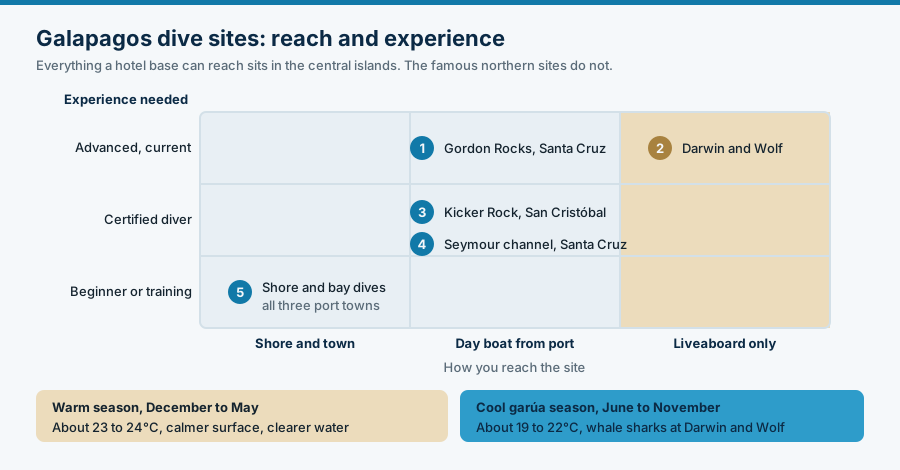
Darwin and Wolf, where whale sharks pass between June and November, sit far north of the inhabited islands and are reachable only by liveaboard. From a hotel base you can dive Kicker Rock off San Cristóbal, Gordon Rocks off Santa Cruz for experienced divers, the Seymour channel, and shore sites near the ports. Water runs 19 to 24°C depending on season.
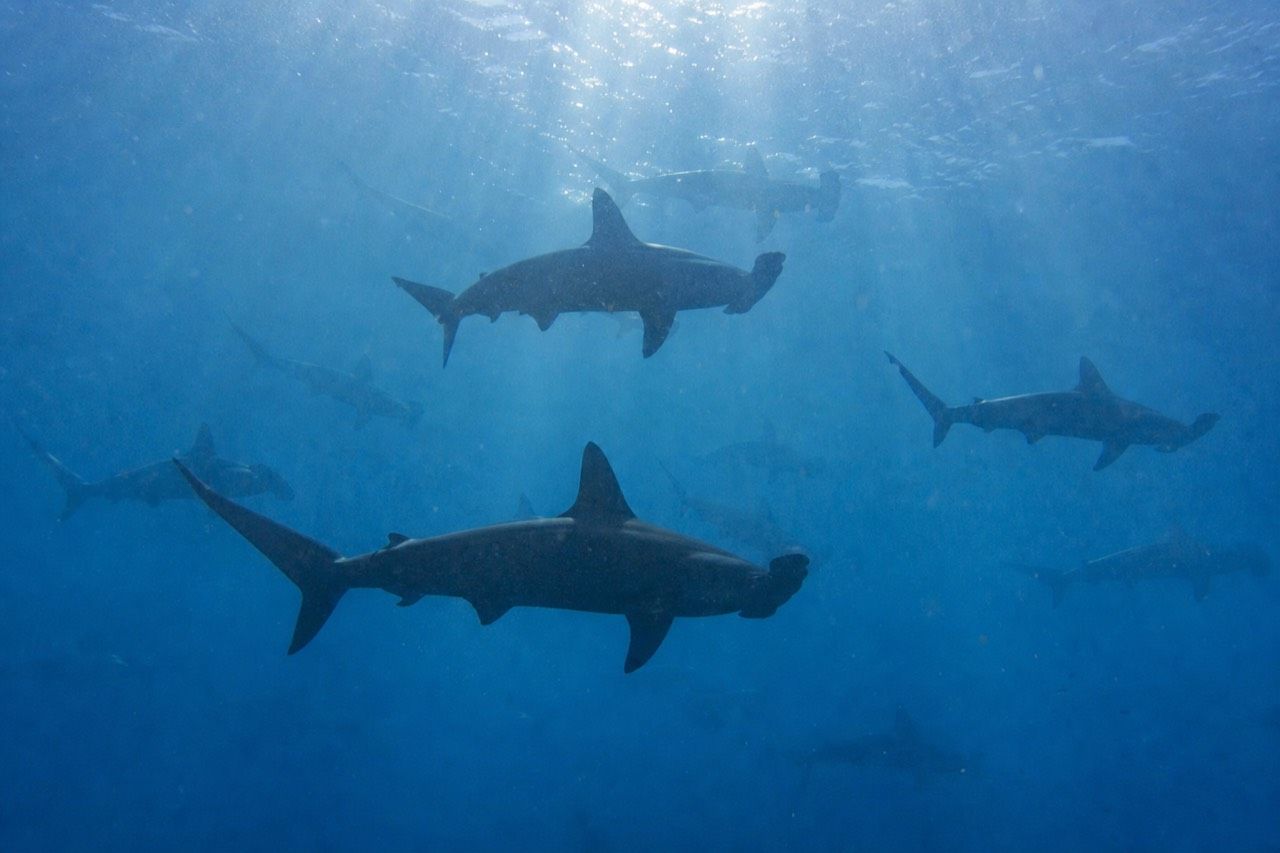
Type "Galapagos diving" into any search box and the first screen is hammerhead walls, whale sharks and a column of divers hanging in blue water off a rock in the far north. I have been to the islands three times and never once been within a day's sailing of that place, and neither will you if you are staying in a hotel. Those photographs come from Darwin and Wolf, two small islands hundreds of kilometres north of anywhere you can sleep, and the only way to dive them is on a liveaboard boat that spends its whole week up there.
That gap between the marketing images and the day-trip reality is the single most useful thing to understand before you book anything.
Can you dive Darwin and Wolf on a day trip?
No. Darwin and Wolf sit far to the north of the inhabited islands, well beyond the range of any day boat, and diving them requires a multi-day liveaboard with a specific northern-itinerary permit. Whale sharks pass those sites between June and November, which is why the images circulate, but no hotel-based trip reaches them.
This is not a scheduling problem you can solve with an early start. The crossing takes a night of sailing in each direction, the sites are exposed open ocean, and liveaboard operators hold limited permits for the northern route. Those boats sell out far in advance and are priced accordingly.
We do not list liveaboards on this site, and saying so plainly is more useful than pretending a day boat gets you close. If Darwin and Wolf are the reason you are going, book a dedicated liveaboard directly, plan around the June to November whale shark window, and treat everything below as separate.
The wider context is that all of this water is managed. The Hermandad Marine Reserve, created in January 2022, added 60,000 km² and brought the total protected marine area to 198,000 km², and the expansion announcement explains why those northern corridors carry so much large marine life in the first place.
What can you actually dive from the islands?
Four realistic options from a hotel base. Kicker Rock off San Cristóbal, the headline day site. Gordon Rocks off Santa Cruz, an advanced site with strong currents. The Seymour channel north of Baltra. And shore or shallow bay dives near the port towns, which are where most training dives happen.
Kicker Rock, León Dormido on the charts, is a sheer tuff cone split by a narrow channel, and the channel is the dive. Currents funnel through it, and it is known for sharks and rays passing in the blue. It runs as a full day from Puerto Baquerizo Moreno and often pairs with a beach stop.
Gordon Rocks is the one that separates divers. It is a submerged crater rim off eastern Santa Cruz with genuinely strong, shifting currents, and it is treated as an advanced site for that reason rather than for depth alone. Operators turn people away from it, which is a good sign.
The Seymour channel offers current-driven drift diving with reliable large fish. Shore and bay dives near the ports are calmer, shallower and the usual venue for a first dive or a refresher, which is exactly what they should be used for.
| Site | Departs from | Typical level | What draws people |
|---|---|---|---|
| Kicker Rock (León Dormido) | Puerto Baquerizo Moreno, San Cristóbal | Certified, some experience expected | Channel dive, sharks and rays in the blue |
| Gordon Rocks | Puerto Ayora, Santa Cruz | Advanced, strong currents | Submerged crater rim, big pelagic traffic |
| Seymour channel | Santa Cruz or Baltra | Certified, comfortable with current | Drift diving with large fish |
| Shore and bay dives | All three port towns | Beginner and training | Calm water, sea lions, first dives |
| Darwin and Wolf | Liveaboard only | Experienced, current-certified | Whale sharks June to November |
What certification do you need to dive in the Galapagos?
At minimum an open water certification for the standard day sites, and a logged history plus an advanced qualification for Gordon Rocks. Uncertified visitors can usually do an introductory dive in sheltered water. Bring your card and your logbook, because operators here do check, and the currents are the reason they check.
The honest version of this is that the Galapagos is not a good place to learn casually. Cold water, current and surface chop are a difficult combination for a new diver, and the sites that make the archipelago famous are precisely the ones where inexperience becomes a safety problem. Several listings sold as multi-day packages exist specifically to certify people on site over several days, which is a more sensible route than turning up qualified on paper and unpractised in reality.
If you are already certified but have not been in the water for a year or two, do a shallow refresher dive on your first day rather than starting at a current site. Nobody regrets that. The park's general visitor rules also apply underwater, including the two-metre distance from wildlife, which sea lions will ignore on your behalf.
| If you are | Realistic options | What to avoid |
|---|---|---|
| Not certified | Introductory dive in sheltered water, or a multi-day certification course on the islands | Booking a current site and hoping |
| Certified, recent dives | Kicker Rock, Seymour channel, shore sites | Gordon Rocks without checking the operator's requirement |
| Certified, out of practice | Refresher dive first, then day sites | Starting the trip at an advanced site |
| Advanced with current experience | Gordon Rocks and the full day-site list | Assuming a day boat can reach Darwin or Wolf |
How cold is the water, and do you need a wetsuit?
Colder than most people expect from the equator. The warm season from December to May sits around 23 to 24°C. The cool garúa season from June to November drops to about 19 to 22°C. A full wetsuit is standard in both, and the cool months are the ones where thin gear ruins a second dive.
The Galapagos sits on a cold upwelling, which is the entire reason there are penguins here. That same water makes diving productive and makes divers cold. On a two-tank day, the first dive is fine and the second is where an underspecified suit shows up, especially in September when the water is at its lowest.
Rental gear normally comes with the trip. Confirm the suit thickness offered rather than assuming, and if you feel the cold, ask whether a hood is available. Nobody has ever complained about being slightly too warm on a Galapagos dive.
| Season | Months | Sea temperature | Conditions |
|---|---|---|---|
| Warm season | December to May | About 23 to 24°C | Calmer surface, better visibility on average, warmer air |
| Cool garúa season | June to November | About 19 to 22°C | Colder, more nutrients and plankton, more large-animal activity |
That temperature swing shapes the whole trip, not only the diving, and the best time to visit guide sets it against the wildlife calendar and prices.
Why is there so little Galapagos diving on booking platforms?
Because almost all of it is booked directly with dive shops in the port towns. The islands have a small number of operators with limited daily capacity, and they fill through their own channels and repeat customers. What reaches GetYourGuide and Viator is a thin slice, often with no listed price and very few reviews.
This is unusual, and it is worth stating rather than hiding. On most destinations a booking platform shows you the whole market. Here it shows you a corner of it. Several diving listings carry no rating at all and several show no price, in which case the figure appears in the booking flow rather than on the card.
What a platform booking does give you is a confirmed slot before you fly, in a place where boats are small and high-season capacity genuinely runs out. If that certainty is worth more to you than the widest choice, a listed day such as the Galapagos Discovery one-day diving experience, which runs roughly 7am to 2:30pm, is the straightforward option, and you can check live availability & prices on GetYourGuide. Everything else we list underwater sits on the diving tours page.
If you want the widest choice instead, arrive with a day or two of slack and walk into the dive shops in Puerto Ayora or Puerto Baquerizo Moreno. Both approaches are legitimate. Pretending the platform list is the full market is not.
| What we list | Platform | Shape of the day | Notes |
|---|---|---|---|
| One-day diving experience | GetYourGuide | About 7 to 8 hours, roughly 7am to 2:30pm | Rating from a small number of reviews |
| Kicker Rock scuba for certified divers | Viator | About 5 hours | Certification required, few reviews |
| Multi-day diving package with accommodation | Viator | 5 days | Price shown in the booking flow |
| PADI certification course package | Viator | 6 days | Certifies you on the islands |
How does diving fit into an island-hopping trip?
Awkwardly, unless you plan for it. Dive sites are tied to specific port towns, so a Kicker Rock day requires a San Cristóbal base and a Gordon Rocks day requires a Santa Cruz base. Standard dive safety guidance is to leave at least 24 hours between your last dive and flying, which costs you a day at the end.
The ferry problem compounds it. Crossings between islands take 2 to 2.5 hours each way and cost about $30 to $35, so you cannot dive one island's sites while sleeping on another. Two dive days in different towns means a relocation between them, which is a full travelling day. The mechanics of that are in the island hopping guide.
The no-fly interval is the one people forget. Your flight out of Baltra or San Cristóbal is usually mid-morning, so a dive on your final full day is fine but a dive the afternoon before departure is not. Build the last day around a land activity instead, a highlands trip or a beach walk, and dive earlier in the week. The Conservancy's trip planning pages are a good sanity check on the wider sequencing, and if Kicker Rock is your priority the Kicker Rock guide goes deeper on that one site.
Common questions
Is the Galapagos a good place to learn to dive?
Not casually. Cold water, current and open-ocean chop make it a demanding place for a first dive, and the best sites are the ones where inexperience matters most. Multi-day certification courses do run on the islands and are a reasonable route, but a quick introductory dive followed by an advanced site is not.
Can I snorkel instead and still see the big animals?
Often yes. Sea lions, turtles, rays and reef sharks all show up on snorkel stops attached to standard day tours, and white-tipped reef sharks are routinely visible from the surface at sheltered sites. Hammerheads in numbers are a diving proposition.
How far in advance should I book diving?
Earlier than you would for a land tour. Dive boats are small, operator capacity is limited, and high-season slots at Kicker Rock and Gordon Rocks disappear. If your trip is fixed, book the dive days first and arrange the rest around them.
Do I need my own gear?
Rental kit is normally included, so most people bring only a mask they trust and possibly a computer. Confirm the wetsuit thickness before you travel, since the cool season water is genuinely cold and the second dive of the day is where that gets uncomfortable.
Why do some dive listings show no price?
Because the operator sets the figure inside the booking flow rather than on the listing card, usually where pricing varies by group size, date or included gear. Open the listing and step into the date selection to see the real number rather than assuming a card price applies.